
Weekend Activities for Desi Kids in San Antonio
Hindu Calendar Observances for Desi Kids in San Antonio: A Parent's Guide for Late July and August 2026
TL;DR
- Four key Hindu calendar dates fall between July 24 and July 29 in San Antonio: Ekadashi, Pradosh Vrat, Guru Purnima, and Purnima
- A second wave of observances — Sankashti Chaturthi, Ekadashi, Pradosh Vrat, and Amavasya — runs from August 2 through August 12
- Each occasion carries kid-friendly rituals and teachable moments about Indian culture and faith
- You do not need a large temple community nearby to observe these dates meaningfully
- Consistency with simple home rituals builds lasting cultural identity for Indian-American children
Why the Hindu Calendar Matters for Desi Kids in San Antonio
Raising Indian-American children in San Antonio comes with a particular parenting challenge: how do you pass on cultural and spiritual traditions when the infrastructure that makes it easy in India — the neighborhood mandir, the family pandit, the extended family gathering — is not readily available in everyday life?
The answer most Desi parents in San Antonio eventually find is that the Hindu calendar itself is the framework. Regular observances — even simple ones at home — create rhythm, vocabulary, and identity for children who are simultaneously navigating American school culture and the values of their Indian family background.
The eight calendar dates between July 24 and August 12, 2026 form a concentrated window to do exactly that. Not one or two isolated festivals, but a sequence of eight occasions across three weeks — Ekadashi, Pradosh Vrat, Guru Purnima, Purnima, Sankashti Chaturthi, a second Ekadashi, a second Pradosh Vrat, and Amavasya. Each one has a distinct character, a distinct teaching, and a distinct way to involve children.
Here is how to use each one with your kids.
Ekadashi (July 24 and August 8)
Ekadashi — the eleventh lunar day, or tithi, of each fortnight — is observed twice a month: once during the waxing moon and once during the waning moon. The July 24 Ekadashi in 2026 is Devshayani Ekadashi, one of the most significant Ekadashis of the year, marking the start of Chaturmas — the four-month period during which Lord Vishnu is said to enter a cosmic sleep and spiritual disciplines are observed more intensely. The August 8 Ekadashi continues within this Chaturmas window.
For children, Ekadashi is a natural entry point into the concepts of fasting and intentionality. Even young children can participate in a modified form — skipping grains at one meal, or choosing a simple, sattvic breakfast. Explain that Ekadashi is about giving the body and mind a deliberate rest and turning attention inward. Older children can research the specific Ekadashi name and the story behind it, which builds both language skills and cultural knowledge.
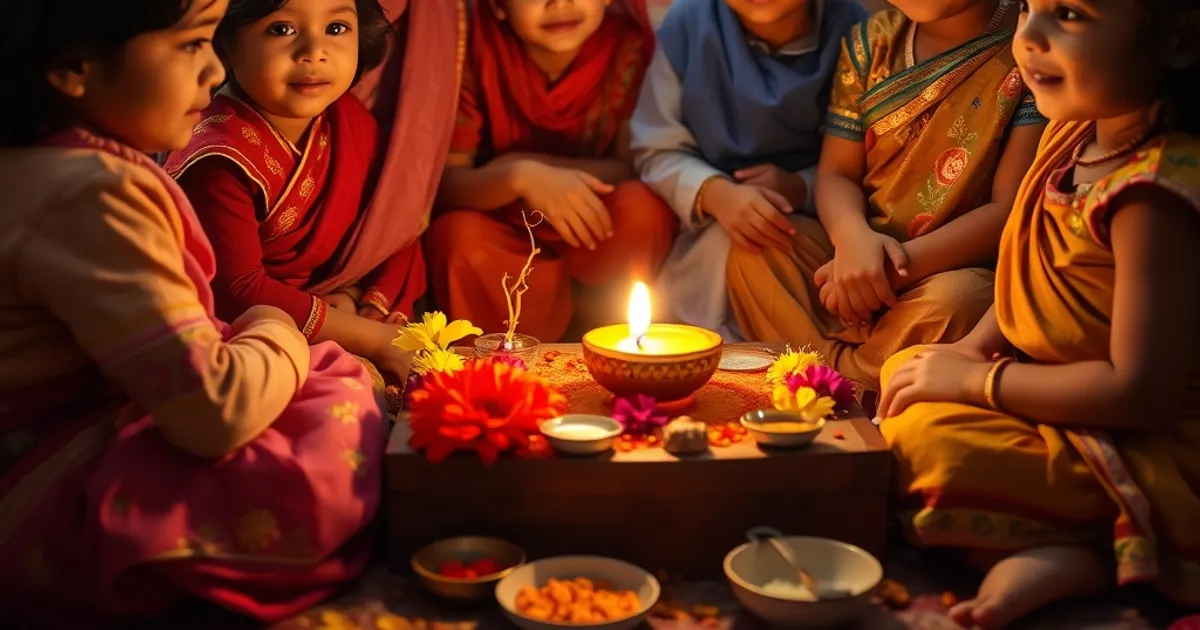
At home in San Antonio, Ekadashi can be marked with a morning aarti using a diya and incense, preparing a grain-free meal together (sabudana khichdi, fruits, and nuts are traditional choices), and a short story session about Vishnu and the meaning of Chaturmas.
Pradosh Vrat (July 26 and August 10)
Pradosh Vrat falls on the thirteenth lunar day (Trayodashi) of each fortnight and is dedicated to Lord Shiva. The worship is conducted specifically in the evening during the pradosh kaal, as the sun sets — which makes it one of the most child-accessible observances of the month. You are performing the ritual at a time when children are home from school or activities, rather than in the early morning.
For Indian families in San Antonio, the evening timing of Pradosh Vrat is genuinely practical. Set up a simple home puja space with a Shiva image or linga, offer bilva (bel) leaves if available or any available green leaves as a substitute, light a diya, and chant Om Namah Shivaya together. Even five minutes of this ritual creates an anchor.
Telling children the story of why Shiva is worshipped at twilight — the liminal moment between day and night, when the cosmic dance of Nataraja is said to be at its most potent — sparks curiosity about Hindu cosmology in a way that abstract explanations cannot.
Insider Tip: San Antonio does not have a large established Shiva mandir with regular public programs. The most reliable way for Desi families to observe Pradosh Vrat here is a consistent home puja setup. Keep a small Shiva shrine space established — even a dedicated shelf with a photo or small murti — so the ritual feels established rather than improvised each time it comes around.
Guru Purnima (July 29)
Guru Purnima is the full moon of the Hindu month of Ashadha, and it stands among the most beloved days on the Indian spiritual calendar. Traditionally, disciples honor their guru on this day — whether a spiritual teacher, a classical music ustad, a dance guru, or a revered elder in the family.
For Indian-American kids in San Antonio, Guru Purnima is an opportunity to introduce the concept of the guru as it exists in Indian thought. The word itself — gu meaning darkness, ru meaning remover — defines a guru as one who moves you from ignorance toward knowledge and light. That definition is broad enough to include teachers, mentors, grandparents, and older siblings as well as formal spiritual teachers.
Some Desi families in San Antonio use Guru Purnima to write a handwritten thank-you note or make a phone call to a beloved teacher or mentor, to look at photos or hear stories about a family's spiritual lineage, or to read or listen together to teachings from a figure respected in their tradition.
For children involved in Indian classical dance, music, or martial arts, honoring their ustad or acharya on Guru Purnima becomes a beautiful practice that connects American extracurricular life to deep Indian cultural roots. It turns a Tuesday evening into something the child remembers years later.
Purnima (July 29)
The Purnima — the full moon day — falls on the same date as Guru Purnima this month, July 29. Purnima is observed every lunar month as a generally auspicious occasion for worship, charity, beginning new endeavors, and expressing gratitude.
For younger children especially, the full moon itself is the most direct teaching tool. Step outside with your kids on the night of July 29, look at the moon, and make the observation that this is the same full moon that Indian families around the world are watching tonight — in San Antonio, in Houston, in New Jersey, in Mumbai, in Chennai. The shared sky is a surprisingly powerful way to make a child feel that Indian identity is global, not provincial.
Many families observe Purnima with a Satyanarayan Katha or puja at home. Even a shortened version, read from a puja book and followed by panchamrit and prasad, makes the day feel set apart from an ordinary Tuesday.
Sankashti Chaturthi (August 2)
Sankashti Chaturthi is the monthly observance dedicated to Lord Ganesha, falling on the fourth lunar day of the waning moon. A fast is kept through the day and broken after the moon rises in the evening, with sweets offered to Ganesha.
Ganesha is one of the most accessible deities for children in the Indian tradition — approachable, associated with new beginnings and the removal of obstacles, and with iconography that children recognize and gravitate toward. Sankashti Chaturthi is straightforward to involve kids in: drawing or coloring images of Ganesha is both creative and devotional; making modak, his favorite sweet traditionally prepared as steamed rice dumplings, is a hands-on kitchen activity; and the moon-sighting to break the fast turns the evening into a shared moment of anticipation.
The simplicity of the practice — fast, puja, moon sighting, prasad — means even young children can follow the arc of the observance from beginning to end, which gives them a sense of ownership over the ritual.
Amavasya (August 12)
Amavasya, the new moon, closes out this three-week window of observances. It is a day associated with ancestors — pitru tarpan, the offering of water to honor one's ancestors, is the traditional practice, and many Hindu families observe a fast or abstain from certain activities on this day.
For children, Amavasya is a natural moment to talk about family history, lineage, and the concept that we carry our ancestors with us. Pull out family photographs, tell stories about grandparents or great-grandparents, light a diya in their memory and say their names aloud. Even simple acts make the invisible visible for children growing up far from the places where their family's roots are.
This is also a useful occasion to talk about the lunar calendar itself — how the moon governs the Hindu festival cycle, how Amavasya and Purnima anchor the month at its dark and bright poles, and why so many Indian observances are tied to the moon's phases rather than the solar calendar.
FAQ
Do we need a temple to observe any of these dates? No. Ekadashi, Pradosh Vrat, Guru Purnima, Purnima, Sankashti Chaturthi, and Amavasya can all be observed meaningfully at home with a basic puja setup.
How much time does a typical home observance take? A basic home ritual takes fifteen to thirty minutes. Even five minutes of focused intent — a diya lit, a brief prayer offered, a shared intention stated — counts as an observance.
What if my kids seem uninterested or resistant? Consistency over years matters more than enthusiasm at any single occasion. Children who grow up with these dates on the family calendar — even minimally observed — develop familiarity and eventually curiosity. The ritual repetition does the work over time.
Are there San Antonio Indian community organizations that mark these dates? Several Hindu and Indian cultural organizations are active in San Antonio. Check with local community associations for any organized programs tied to these specific dates.
What is the difference between Purnima and Guru Purnima? Purnima is the full moon day, observed monthly as generally auspicious. Guru Purnima is specifically the Purnima of the month of Ashadha, set aside to honor one's teacher or guru. In 2026, both fall on July 29.
Bottom Line
San Antonio's Desi parent community has a concentrated window of eight Hindu calendar observances between July 24 and August 12. Ekadashi on July 24 and again on August 8, Pradosh Vrat on July 26 and again on August 10, Guru Purnima and Purnima both on July 29, Sankashti Chaturthi on August 2, and Amavasya on August 12 — each one offers a teaching moment, a ritual anchor, and a practical way to bring Indian cultural identity into your family's life without waiting for a major festival or a trip to the mandir. The calendar is the curriculum.