
Singapore Blocks Anti-Indian Social Media Posts While Indian Mango Festival Draws Crowds
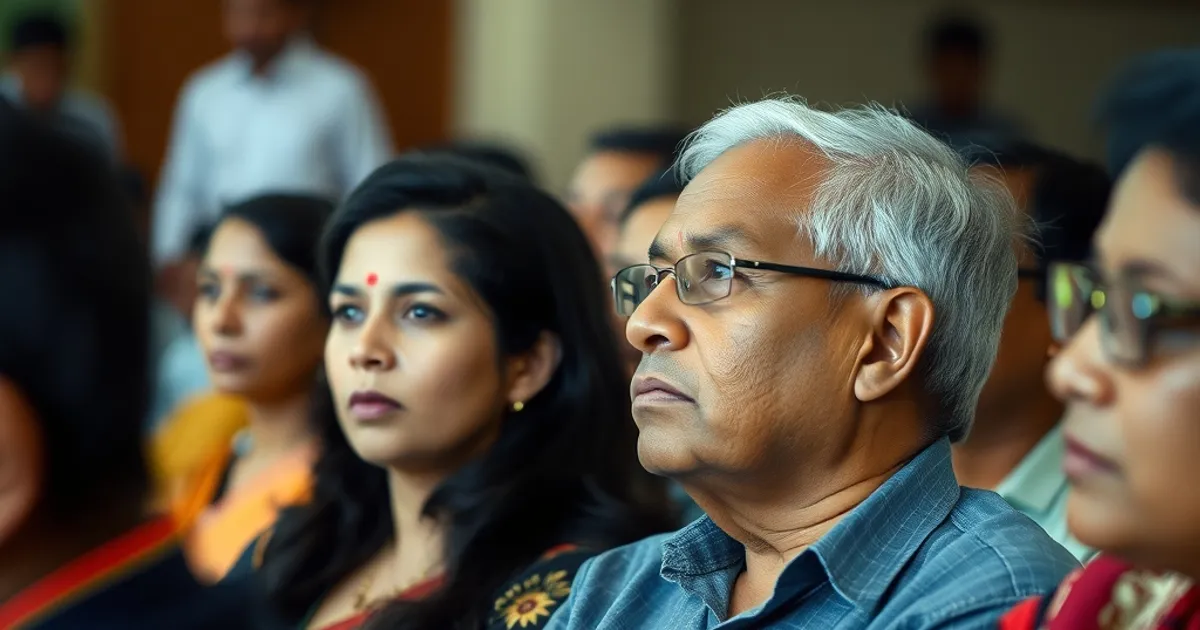
Singapore made international headlines this week after authorities ordered the blocking of social media posts deemed anti-Indian, invoking racial harmony laws and drawing commentary about how city-state governance handles online content. The action came as Singapore's Indian community celebrated the Indian Mango Festival 2026, and Indian cricketer Tilak Sooryavanshi added to the week's South Asian storylines with a confident fifty on the international stage.
🗳️ Singapore Blocks Anti-Indian Social Media Posts
Singapore's government ordered the removal of social media posts characterized as anti-Indian, citing the city-state's racial harmony laws and the potential for such content to inflame ethnic tensions. Asian News reporting noted that the action reflects Singapore's distinctive approach to managing online content deemed harmful to inter-ethnic relations — an approach that gives authorities significant powers to compel platforms to remove content that would be lawful in many Western countries. The blocked posts reportedly targeted the Indian community in Singapore, which comprises a significant and historically well-established minority. Singapore's government has long maintained that racial and religious harmony require active management, not merely passive tolerance, and the blocking of anti-Indian content was framed within that tradition. Civil liberties observers raised questions about the breadth of content restriction powers, while community advocates focused on the substantive protection the action offered to a community that had faced online hostility. The episode added Singapore to the growing list of jurisdictions grappling with the intersection of platform content moderation, racial protection, and free expression. [4]
🗳️ Singapore's Anti-Indian Post Ban Exposes Threat of Race Weaponisation
South China Morning Post analysis of Singapore's decision to block anti-Indian social media content argued that the episode exposed a wider threat: the systematic weaponization of race and ethnicity as tools for online harassment and political mobilization in multi-ethnic societies. The analysis positioned Singapore's case within a global pattern in which South Asian communities across multiple countries have faced coordinated online hostility, sometimes driven by local political actors and sometimes by transnational networks with varying motivations. Singapore's response — direct government-ordered blocking — is relatively unusual in the democratic world and reflects the city-state's history of treating communal harmony as a managed rather than an emergent outcome of open discourse. Critics and supporters of the Singapore approach are divided on whether such interventions protect vulnerable communities or create precedents that could suppress legitimate speech. The SCMP piece noted that Singapore's experience is being watched carefully by other diverse societies seeking frameworks for managing online content that targets ethnic minorities without establishing overly broad censorship powers. [7]
🎉 Indian Mango Festival 2026 Brings Cuisine and Culture to Singapore
The Indian Mango Festival 2026 opened in Singapore to strong attendance, bringing dozens of mango varieties from across India alongside Indian culinary demonstrations, cultural performances, and community programming. Indiplomacy reported that the festival functions as a celebration of India's extraordinary mango diversity — a country that produces hundreds of named varieties with distinct flavour profiles, origins, and cultural associations — while also serving as a platform for strengthening cultural and trade connections between the Indian community in Singapore and the broader public. Festival visitors were able to sample varieties including Alphonso, Kesar, Dasheri, and others that carry geographic indication status in India, making them difficult to access outside of specific Indian diaspora contexts. The event attracted food enthusiasts from across Singapore's multicultural population, reflecting the fruit's broad appeal beyond the South Asian community. Indian government officials and diplomatic representatives attended, underlining the festival's role as a cultural diplomacy platform. A companion Akashvani report noted that Indian mangoes also served as rewards within the broader cultural festival programming. [5]
🤝 Indian-Origin Man Banned From Driving After Endangering Sons
A Singapore court imposed a driving ban on an Indian-origin man after finding that he had endangered the lives of his two sons through reckless conduct behind the wheel. Tribune India reported the case, noting that the court's judgment took into account the aggravated nature of the risk given that the endangered passengers were the driver's own children. The case drew comment in South Asian community forums in Singapore and internationally, where discussions of parental responsibility and road safety intersected. Singapore maintains strict road safety standards enforced through its court system, and driving bans are applied in cases where conduct is found to be seriously dangerous. The case does not reflect broader community trends but was covered for its human interest dimensions and for the specific detail that the victims of the dangerous driving were the driver's own children, a factor courts weighed heavily in the sentence. Community organizations involved in family welfare and road safety used the case as a reminder of the responsibilities that accompany driving privileges, particularly when children are passengers. [1]
🎬 India Cricketer Sooryavanshi Confident After Maiden International Fifty
Indian cricketer Tilak Sooryavanshi marked a significant personal milestone by scoring his maiden international fifty, drawing praise from coaches and commentators for the manner of the innings and the confidence it suggested heading into a busy schedule. Yahoo Sports Singapore reported that Sooryavanshi spoke about drawing confidence from the performance and expressed determination to build on the foundation of the half-century in future international appearances. Sooryavanshi has been a highly anticipated young talent in Indian cricket, having made his mark in domestic and youth competitions before breaking into the senior squad. A maiden fifty at the international level is a meaningful benchmark — it demonstrates that a young player can convert good starts under the additional pressure and quality of international opposition. Cricket-following audiences in Singapore, where interest in the Indian national side runs high within the South Asian community, tracked the milestone closely, with social media responses reflecting pride in the young batter's achievement and anticipation of more to come. [3]
Sources: [4] AsiaNews · [7] South China Morning Post · [5] Indiplomacy · [1] The Tribune · [3] Yahoo News Singapore