
Singapore PM Honors Tamil Teachers Union as Indian Community Faces Online Threats
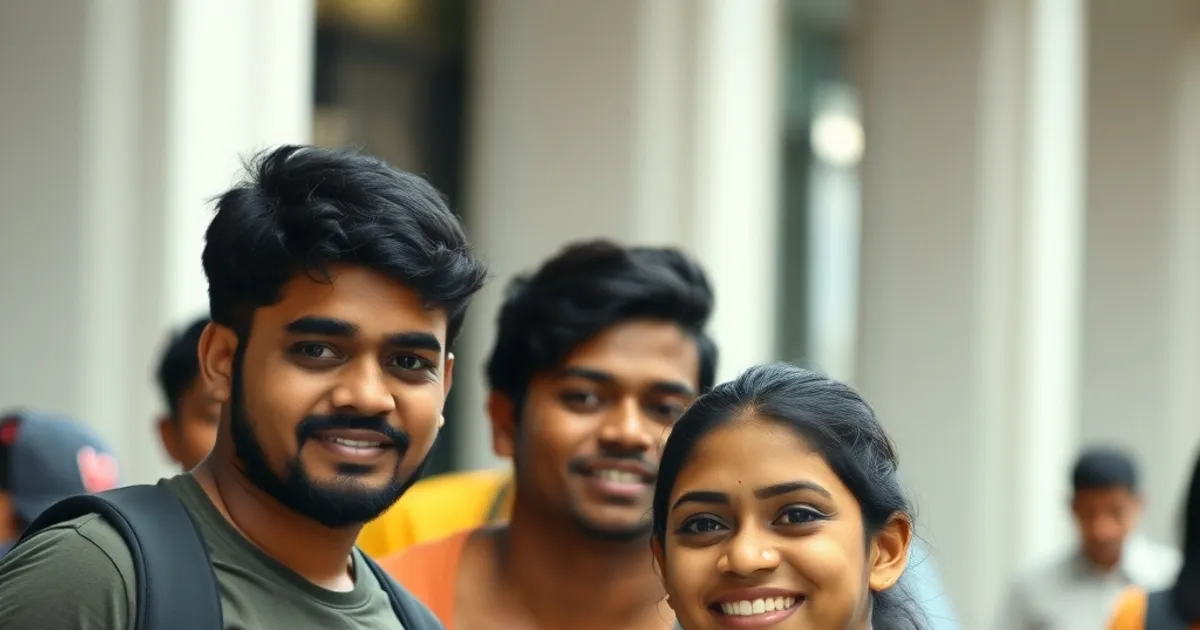
Singapore's Prime Minister Lawrence Wong joined Tamil educators and labour movement leaders to celebrate the 75th anniversary of the Singapore Tamil Teachers' Union, reaffirming the government's commitment to Tamil-language education and multicultural values. In a separate development, authorities moved to block a wave of social media posts targeting the Indian community, which officials said likely originated from a China-based platform seeking to inflame racial tensions. Meanwhile, a Yahoo News Singapore report highlighted Indian manufacturers' growing role as indispensable suppliers in the global AI infrastructure buildout.
🎓 PM Wong Marks STTU's 75-Year Legacy at Anniversary Dinner
The Singapore Tamil Teachers' Union marked its 75th anniversary with a gala dinner attended by Prime Minister Lawrence Wong and members of the labour movement. PM Wong opened his address with "Good evening and Vanakkam," the Tamil greeting underlining the cultural weight of the occasion. In his speech, the Prime Minister praised STTU for standing "shoulder to shoulder" with Tamil language educators for seven and a half decades, championing their welfare, strengthening the teaching profession, and advancing Tamil-language instruction across Singapore. He noted that the union had begun this work even before Singapore gained independence, carrying the mission through the nation's formative years with consistent purpose and commitment. From a founding membership of a handful of educators, STTU has since grown into a vibrant union, a trajectory that drew particular satisfaction from NTUC and its Secretary-General. PM Wong's attendance underlined the government's long-standing recognition of Tamil as one of Singapore's four official languages and the union's central role in sustaining Tamil-language education for successive generations of students. The event brought together educators, union officials, and senior government figures in a collective affirmation of the importance of Tamil-language instruction to Singapore's multicultural identity and the continued commitment to nurturing that heritage for future generations of Singaporeans. [2]
🗳️ Singapore Blocks China-Linked Anti-Indian Social Media Posts
Singapore authorities moved to block a series of social media posts carrying anti-Indian content, citing concerns over racial harmony in the multiracial city-state. AsiaNews reported that officials determined the material likely originated from a China-based platform and was designed to inflame tensions against Singapore's Indian community, which the report describes as a key pillar of the country's multicultural society. The action reflects Singapore's robust legal framework for managing online content deemed harmful to social cohesion, a set of tools the government has deployed to address divisive content targeting various communities. Analysts have noted that the Indian community, which makes up a significant share of Singapore's resident population, has periodically been targeted by discriminatory content online and offline, particularly as debates around employment pass holders and foreign talent policies have intensified in recent years. By blocking such content proactively, Singapore's authorities signalled that race-based targeting on social media will not be tolerated regardless of its country of origin. The move was consistent with Singapore's tradition of treating racial harmony as a non-negotiable social value, enforced through legislation and executive action alike. Authorities' willingness to attribute the content to a foreign platform also highlighted growing concern about externally driven disinformation aimed at fracturing Singapore's multiracial social compact and eroding trust within the city-state's Indian community. [6]
🏢 Indian Manufacturers Cash In on Global AI Infrastructure Boom
Indian manufacturers are reaping significant benefits from the global artificial intelligence infrastructure buildout, with companies supplying fibre-optic cables, power systems and cooling equipment finding themselves at the centre of one of the most capital-intensive technology cycles in history, according to an AFP report carried by Yahoo News Singapore. Factories in western India are running around the clock to convert glass into hair-thin fibre-optic strands destined for data centres powering the worldwide AI boom. Analysts at Nomura have characterised the opportunity as a classic picks-and-shovels trade, drawing an analogy with how suppliers of tools during a gold rush can out-earn the prospectors themselves. For Ankit Agarwal, managing director of Sterlite Technologies, the shift represents a dramatic transformation for a firm once known mainly as a supplier to telecoms networks. "This is a once in a lifetime opportunity," Agarwal said, reflecting a sentiment shared broadly across India's industrial sector. While investors worry that India is falling behind in developing foundational AI models and software, the country's established strengths in cables, power management and thermal cooling are positioning it as an indispensable partner in the physical infrastructure layer of AI deployment. The story carries particular resonance for Singapore's Indian diaspora, many of whom maintain close professional and investment ties to India's rapidly expanding technology-adjacent manufacturing sector. [3]
Sources: [2] Prime Minister's Office Singapore · [6] AsiaNews · [3] Yahoo News Singapore