
Surrey's Sikh Community Confronts Censored Film and Organized Crime Violence
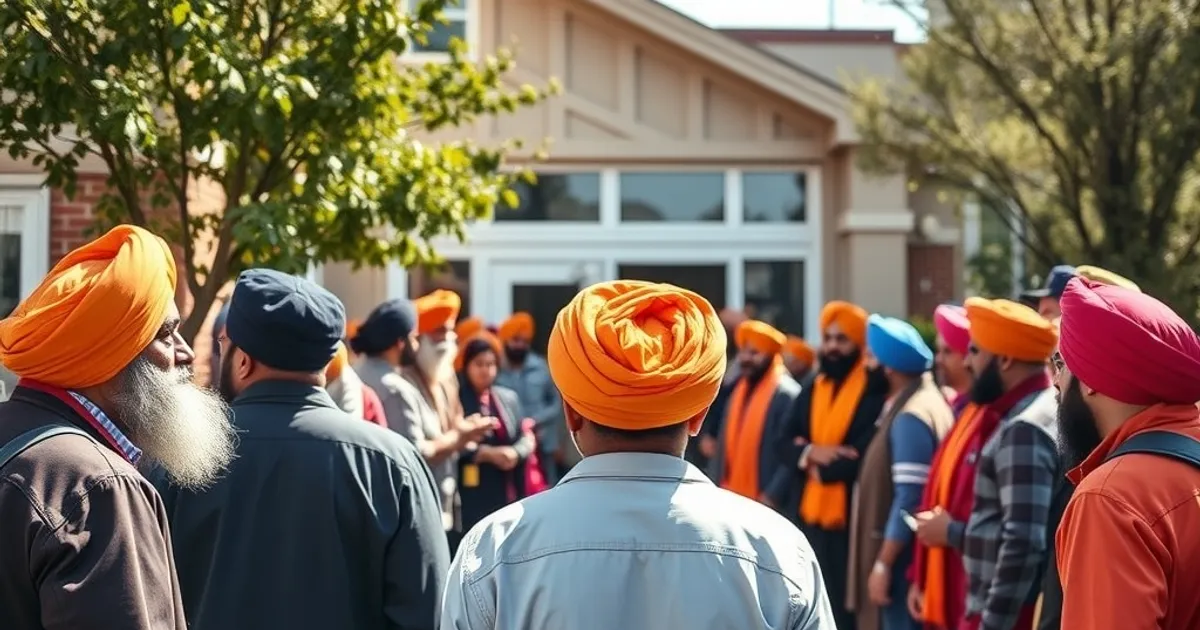
The South Asian community in Surrey, B.C., faces two distinct challenges this month: Indian government suppression of a film about a Sikh human rights activist that is now drawing community screenings, and a wave of extortion-linked violence tied to organized crime networks affecting community leaders.
🎬 India-Banned Sikh Film Satluj Draws Community Screenings in Surrey
CBC reported on July 18, 2026 that a film titled Satluj, which has been blocked by Indian authorities, was drawing community interest at screenings across Canada, including several planned in Surrey, B.C. The film stars Punjabi singer and actor Diljit Dosanjh as Jaswant Singh Khalra, a Sikh human rights activist who investigated and raised concerns about extrajudicial killings and disappearances during Punjab's separatist insurgency in the 1980s and 1990s. Independent journalist and author Gurpreet Singh, based in Delta, B.C., told CBC that India's film censorship board, which must approve all cinematic releases in the country, blocked the film from release for approximately two to three years. When Satluj was eventually released on a streaming platform earlier in July, it was removed within 48 hours on government orders that cited security concerns, according to local media reports. The removal prompted community interest in organizing independent screenings across Canada. Several screenings were planned in Surrey, B.C., for the weekend the report was published. CBC noted that the film's suppression by Indian authorities has given it cultural and political significance for many Sikh Canadians and others interested in human rights documentation from the Punjab insurgency period. [1]
White Rock Man Arrested in U.S. Federal Indian Organized Crime Investigation
Surrey Now-Leader reported that a man from White Rock, B.C., was arrested in connection with a major United States federal investigation into Indian organized crime. White Rock is a municipality in the Metro Vancouver area near Surrey. The report characterized the U.S. investigation as major, indicating a substantial law enforcement undertaking. The White Rock resident's arrest in the context of a U.S. federal probe indicated that the criminal network under investigation had connections extending into communities of the Metro Vancouver area. The case reflected ongoing law enforcement attention to Indian organized crime networks with cross-border reach into Canadian communities. U.S. federal investigations of this type can encompass multiple jurisdictions and may involve cooperation between American and Canadian authorities. The Surrey Now-Leader, which covers news in and around Surrey, reported on the arrest as a significant development in a broader criminal case. The involvement of U.S. federal agencies in a matter connected to a White Rock resident underscored the international dimensions of the organized crime network under scrutiny. The report was part of broader coverage in the publication of organized crime activity affecting the South Asian community in the Metro Vancouver region. [2]
National Post Investigates Bishnoi Gang's Rise and Expansion in Canada
The National Post published an investigation into the Bishnoi gang, examining what the publication characterized as the murderous rise of the criminal network and the role it said Canadian immigration laws played in enabling that expansion. The article's headline described the gang as using Canada's immigration system to grow its network, framing what the publication called lax immigration laws as a factor facilitating the group's establishment and growth in the country. The National Post's investigation added national context to law enforcement concerns about the gang's operations in Canada. The piece raised questions about vulnerabilities in Canadian immigration processes that the network may have exploited. The investigation contributed to a growing body of national reporting on Indian organized crime and its operations in British Columbia and other parts of Canada. The National Post characterized the gang's rise as murderous, indicating that violent criminal conduct was central to its alleged activities. The publication described the gang as using Canada as a base for expanding its network, with immigration pathways forming part of the means through which it established a Canadian presence. The investigation contextualized the gang's operations within the broader landscape of international organized crime. [3]
U.S. Court Documents Link Bishnoi Gang to Death of B.C. Sikh Temple President
Surrey Now-Leader reported that court documents from the United States have linked the Bishnoi gang to the death of a Sikh temple president in British Columbia. The article drew on U.S. court filings to document a connection between the gang and the killing of a B.C. Sikh community leader. The victim was identified as the president of a B.C. Sikh temple, a position of significance within the community. The existence of U.S. court records referencing the death indicated that American federal investigations into the Bishnoi gang had gathered evidence with direct relevance to a killing in Canada. The case illustrated the cross-border dimensions of the gang's alleged activities, with American legal proceedings producing documentation connected to a death in British Columbia. Leaders and institutions within the Sikh community in B.C. have been among those affected by violence linked to organized criminal networks in the Metro Vancouver area. Surrey Now-Leader's reporting connected U.S. court filings to a B.C. killing, adding legal documentation to the ongoing coverage of the gang's alleged activities in Canada. The use of court documents as source material provided a formal evidentiary basis for the reported link between the gang and the death. [4]
Cricket Canada President's Surrey Home Shot At for Second Time in Two Weeks
CBC reported on June 4, 2026 that Surrey Police responded to a shooting just after 4 a.m. Pacific Time at a home in the South Newton neighbourhood, near 57 Avenue and 148 Street. The home belongs to Cricket Canada president Arvinder Khosa. Police said the shooting was believed to be extortion-related. The same home had been targeted in a previous shooting on May 20, 2026. The home was occupied at the time of the June 4 shooting, but no one was injured. Surrey Police Service issued a news release stating the investigation was in its early stages but that it was believed to be extortion-related based on previous threats and the earlier shots-fired incident at the same address. The SPS extortion response team took over the investigation. Police asked anyone with information, including those with CCTV or dashcam footage or knowledge of the suspects' identities, to come forward. The June 4 incident represented the second time in approximately two weeks that the Cricket Canada president's Surrey residence had been targeted in what police characterized as an extortion-related shooting. No injuries were reported in either incident. [5]
Sources: [1] CBC · [2] Surrey Now-Leader · [3] National Post · [4] Surrey Now-Leader · [5] CBC