
Irving Indian Restaurant Claims World's Largest Title as BAPS Temple Ballot Row Forces District 3 Runoff
Irving's South Asian community is commanding headlines across North Texas this week, from a local Indian vegetarian restaurant claiming a world record to a contentious City Council race shaped by an alleged late-night ballot drop tied to the BAPS temple. Meanwhile, federal investigators raided Indian jewelry stores in Texas over a $55 million scam targeting seniors, and masked anti-immigrant protesters confronted Hindu families during Diwali celebrations.
🍛 Irving Indian Restaurant Claims Title of World's Largest Vegetarian Eatery
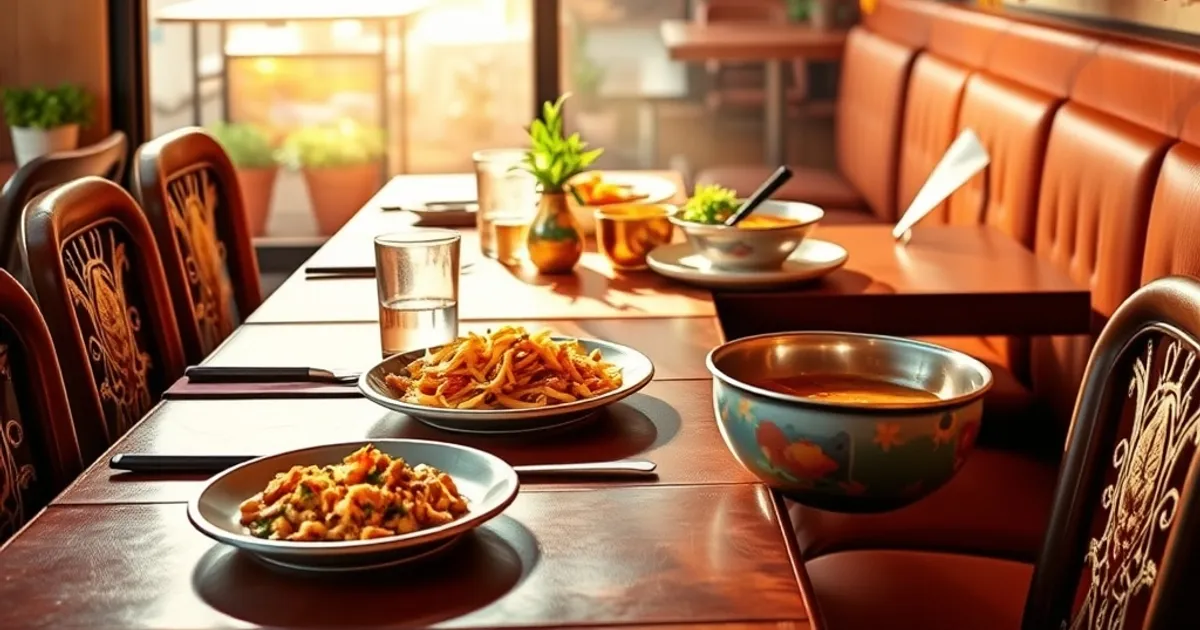
A North Texas Indian vegetarian restaurant in Irving has claimed the title of world's largest, according to its owners, as reported by the Dallas News. The restaurant's claim positions Irving—a city with one of the most concentrated South Asian populations in the Dallas-Fort Worth metroplex—as a landmark destination for Indian dining. For the area's substantial Hindu and Gujarati community, which has long embraced vegetarian eating as a matter of cultural and religious practice, such an establishment is far more than a restaurant: it is a communal gathering space that reinforces cultural identity and shared values. Irving's dense corridor of Indian grocery stores, restaurants, and temples along and near Belt Line Road has long marked it as a hub of South Asian life in North Texas, and this record-breaking restaurant adds a new dimension to that landscape. A venue of such scale also opens possibilities for large family celebrations, religious gatherings, and community events that have historically been hard to host under one roof. Owners making this bold claim publicly signals confidence in the strength and appetite of the local South Asian customer base, and is likely to draw visitors from across the region eager to experience what is being billed as a historic dining establishment. [1]
🗳️ BAPS Temple Allegedly Behind Late-Night Ballot Drop That Pushed District 3 Race to Runoff
A late-night batch of ballots allegedly linked to the BAPS Swaminarayan temple has flipped the Irving City Council District 3 race into a runoff, according to the Dallas Express. The Bochasanwasi Akshar Purushottam Sanstha—BAPS—is one of the largest Hindu religious organizations globally, with a significant temple presence in the Irving area that serves as a spiritual and social anchor for thousands of Gujarati Hindu families. The allegation that a concentrated bloc of ballots arrived late in the evening, with ties to the temple, has drawn sharp scrutiny and reignited debate over how faith-based institutions engage in civic elections. For Irving's South Asian community, the controversy is politically layered: it simultaneously reveals the growing electoral weight of Hindu and South Asian residents—long underrepresented in local government—while raising legitimate questions about the appropriate boundaries of institutional religious involvement in electoral processes. District 3 encompasses areas with significant South Asian residential and commercial concentration, making the outcome of this race directly consequential for community representation. The runoff means voters will have another opportunity to shape who represents them, with the BAPS ballot dispute likely to remain a focal point of discussion among both supporters and critics through the next round of voting. [2]
🏢 Two Indian Jewelry Stores in Texas Raided Over $55 Million Fraud Targeting Senior Citizens
Law enforcement raided two Indian jewelry stores in Texas as part of an investigation into a $55 million scam allegedly targeting senior citizens, according to The American Bazaar. Indian jewelry stores—commonly called gold stores within South Asian communities—are central institutions that function not just as retail outlets but as trusted repositories of cultural wealth, where families invest in gold as a form of savings, dowry, and cultural tradition passed down through generations. The alleged targeting of senior citizens is especially alarming for an immigrant community that frequently relies on familiar, ethnically owned businesses for financial transactions, often placing deep trust in proprietors from their own background. The scale of the alleged scheme—$55 million—suggests an organized operation that may have defrauded a large number of elderly victims over a significant period. For the broader South Asian business community in Texas, the raids carry serious reputational consequences, potentially undermining the trust that customers have placed in ethnic jewelry retailers. The case is expected to prompt greater consumer caution and may accelerate calls for stronger oversight of businesses serving immigrant populations. It also underscores the vulnerability of seniors—particularly those in immigrant communities—to financially sophisticated fraud schemes that exploit community trust. [3]
🤝 Masked Protesters Target North Texas Hindu Community with Anti-Diwali, Anti-Immigrant Signs
Masked protesters in Texas targeted the Hindu community with anti-Diwali and anti-immigrant signs during the Diwali season, according to American Kahani. The demonstrators, who concealed their identities, carried placards specifically opposing Diwali celebrations and broadcasting hostile messages against immigrants—a direct provocation aimed at one of the most joyful and widely observed festivals in the Hindu calendar. Diwali, the Festival of Lights, is celebrated by millions globally and holds deep spiritual and cultural significance for Hindu families in Irving and across the DFW area. For South Asian families who had gathered to celebrate, encountering organized hostility during what is traditionally a season of community joy, light, and togetherness was deeply distressing. The incident drew attention from South Asian media and advocacy organizations, reinforcing the need for law enforcement vigilance and community solidarity in the face of hate-motivated demonstrations. It also reflects a broader national pattern in which anti-immigrant sentiment is increasingly directed at visible cultural and religious events hosted by South Asian, Hindu, and other immigrant communities. The targeting of Diwali—a festival that has become more publicly visible in American cities—suggests that growing cultural presence can also draw backlash, making community safety planning for public celebrations more important than ever. [5]
Sources: [1] Dallas News · [2] Dallas Express · [3] The American Bazaar · [5] American Kahani