
Faith, Vigilantism, and Belonging: What Kuala Lumpur's Temple Row Means for the Desi Community
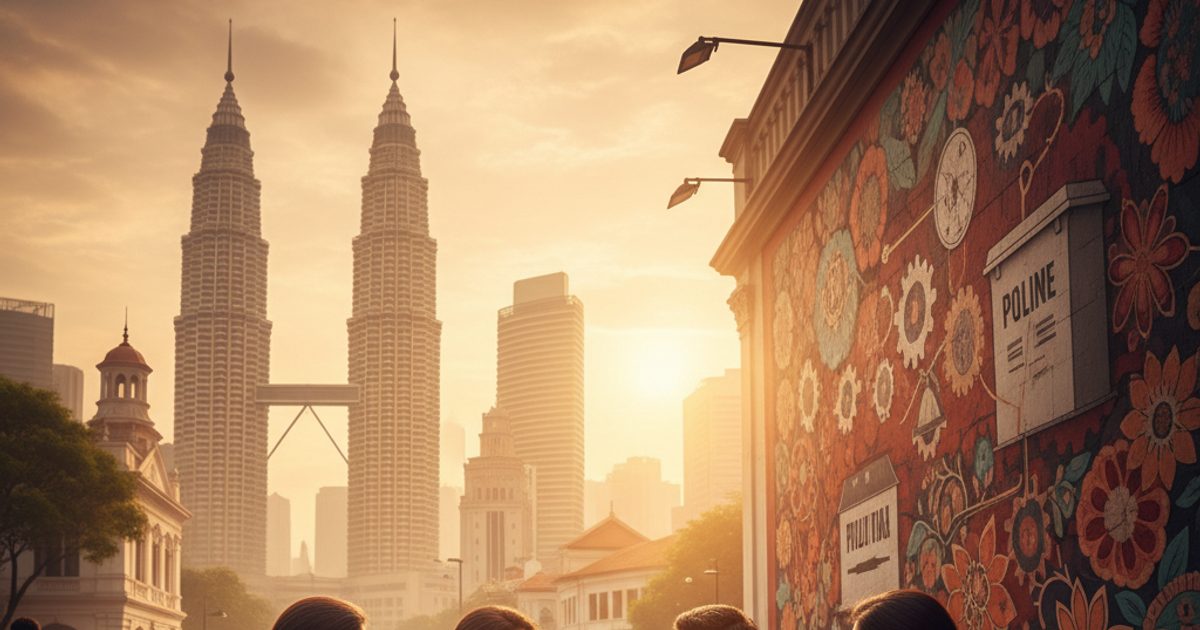
For South Asians who have made Malaysia home, questions of religious freedom, civic safety, and the right to belong carry a deeply personal weight. Two stories this week put those questions front and centre in Kuala Lumpur.
🛕 PM Anwar Warns Against Vigilantism After Temple Rally Banned
A planned rally styled as a protest against so-called illegal houses of worship was set to take place near Jalan Tuanku Abdul Halim in central Kuala Lumpur on a Saturday evening, but police refused permission after receiving more than a hundred reports opposing it. Nineteen people were subsequently detained, among them a controversial preacher. Prime Minister Anwar Ibrahim used a national unity ministry gathering to address the incident directly, cautioning Malaysians not to appoint themselves as self-styled enforcers in communal disputes. He framed social cohesion as something that must be actively protected, warning that economic progress alone cannot sustain national well-being if communal conflict persists. Temple disputes in Malaysia frequently begin as land or planning disagreements but can rapidly escalate into broader identity confrontations, making the government's firm tone particularly significant for minority faith communities. [3]
✈️ Indian Man Left in Limbo at Kuala Lumpur International Airport
A man identified as Aakash, believed to be originally from Jalandhar in Punjab, found himself stranded at Kuala Lumpur International Airport for close to two weeks after a chain of immigration complications left him with nowhere to go. He had been travelling from New Zealand to India using a New Zealand-issued Certificate of Identity rather than a standard passport, and Indian authorities at Delhi airport turned him away for lacking a valid Indian travel document. He was then placed on a flight toward Auckland, but became stuck at Kuala Lumpur during the stopover because he also lacked a valid visa to re-enter New Zealand. Indian security officials noted that without recognised documentation they could not confirm his nationality or citizenship, and uncertainty about whether he held formal asylum status in New Zealand further complicated his case. The situation, which spread widely on social media through videos Aakash reportedly recorded himself at the airport, underscores the precarious position that travellers with ambiguous immigration status can face at international transit hubs. [4]
🌏 Bangladesh Pushes Malaysia to Reopen Labour Migration Pathways
Bangladesh's Prime Minister Tarique Rahman has formally requested that Malaysia ease the restrictions it currently maintains on labour migration from Bangladesh, raising the issue directly in bilateral discussions. Malaysia is a significant destination for Bangladeshi workers, making the migration corridor a matter of considerable economic importance for both countries and for the hundreds of thousands of Bangladeshi nationals already living and working in Malaysia. The appeal reflects broader concerns within the Bangladeshi government about protecting and expanding overseas employment opportunities for its citizens. For Kuala Lumpur's South Asian community, which includes a large Bangladeshi working population, the outcome of these diplomatic conversations could have very tangible effects on livelihoods and family reunification. The request signals that labour rights and migration governance remain active priorities on the Malaysia–Bangladesh diplomatic agenda. [1]
Sources: [3] South China Morning Post · [4] Diya TV · [1] The Diplomat – Asia-Pacific