
Janmashtami 2026 in Mumbai: Events, Puja & Where to Celebrate
TL;DR
- 🪔 Krishna Janmashtami 2026 falls on September 4 — midnight puja, aarti, and darshan mark the spiritual peak across Mumbai
- Siddhivinayak Temple, BAPS Shri Swaminarayan Mandir, and Mumba Devi Temple observe the festival with extended hours and elaborate celebration
- Dahi Handi on September 5 brings competitive Govinda pyramid events to neighborhoods across the city
- The festival calendar leading up to Janmashtami includes Guru Purnima (Jul 29), Nag Panchami (Aug 17), and Raksha Bandhan (Aug 28)
- Plan for crowds at major temples from 10pm onward — arrive early if midnight darshan is the goal
Janmashtami in Mumbai: A City That Celebrates Full-Throttle
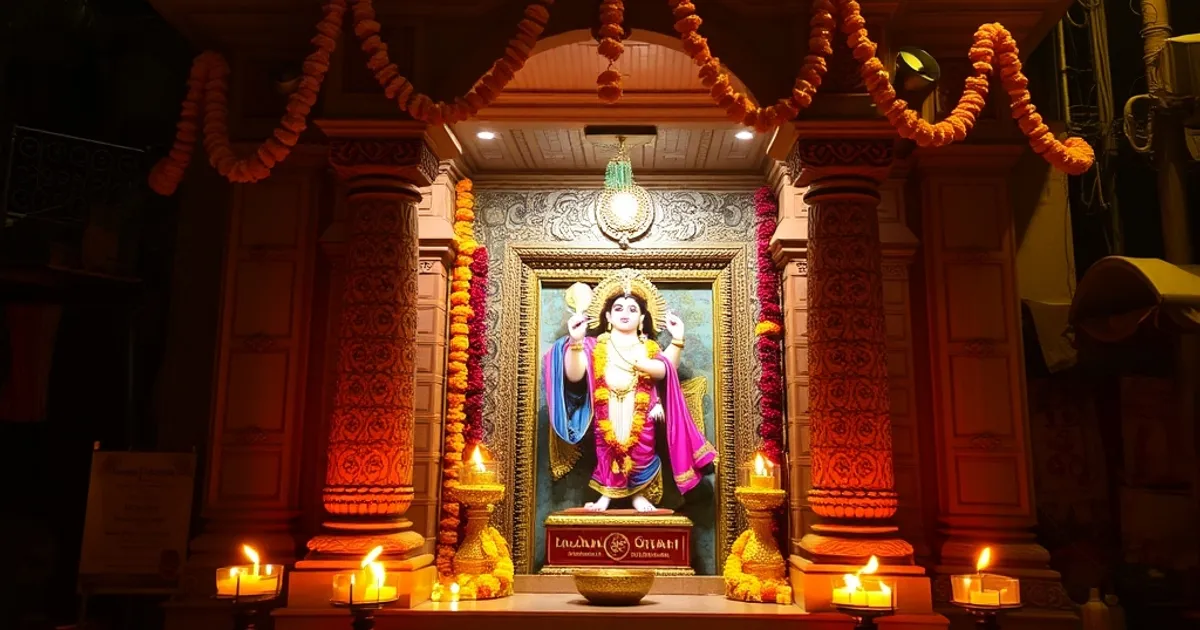
Janmashtami — the birth of Lord Krishna — is observed across India, but Mumbai has its own specific energy around the festival. Temples stay open through the night, lanes around major mandirs fill hours before midnight, bands play bhajans in residential colonies, and the following morning brings Dahi Handi competitions that transform streets into spectator events.
This is not a quiet, introspective festival in Mumbai. It is loud, luminous, and communally intense in a way that is particular to the city.
In 2026, Krishna Janmashtami falls on the night of September 4, with the Janma Muhurta — the symbolic moment of Krishna's birth — occurring after midnight, typically around 12:00am to 12:30am depending on the calculated tithi. The city's temples and cultural centers run programming from evening through the early hours of September 5.
Key Temples for Janmashtami Darshan
Mumbai has a dense concentration of temples, and several are specifically associated with Janmashtami observance at scale.
BAPS Shri Swaminarayan Mandir, located on the Akshardham Complex Swami Vivekanand Road, is one of the most architecturally striking temple spaces in the city. The Swaminarayan tradition holds Krishna's form in deep reverence, and the BAPS mandir observes Janmashtami with elaborate decoration, cultural programs, and devotional gatherings that run well into the night. If you attend one large-scale Janmashtami event in Mumbai, this is a strong candidate.
Siddhivinayak Temple — the Ganesh temple at Prabhadevi — is primarily associated with Lord Ganesh, but its prominence in the city's spiritual life means the surrounding area sees intensified activity during the full August-September festival season. The temple draws continuous footfall through this period and many devotees time their Siddhivinayak darshan to coincide with the broader Janmashtami celebrations nearby.
Mumba Devi Temple, the temple of the city's patron deity, anchors the devotional calendar for many Mumbaikars across the festival season. The goddess's temple near Zaveri Bazaar is a fixed point on the spiritual geography of the city, and the period from late August through early September is among its most active.
Balaji Mandir and Shri Balaji Mandir (on Dr Ambedkar Road) serve as neighborhood-scale Vaishnav temples where Janmashtami observance is community-focused and slightly more intimate than the larger landmark temples.
For those visiting around the broader festive period, Ananthnath Jain Mandir at 302-306 Narsi Natha Street has its own festival calendar during August-September, though it operates within the Jain tradition rather than the Vaishnav one.
The Dahi Handi: Mumbai's Street Festival
The morning after the midnight puja — September 5, 2026 — belongs to Dahi Handi. This tradition reenacts Krishna's childhood mischief of stealing curd: teams called Govinda pathaks form multi-tiered human pyramids to reach and break an earthen pot filled with curd (and sometimes other dairy) hung high above the street.
Mumbai's Dahi Handi competitions are serious affairs. Govinda groups begin training months in advance, and the competitions in certain neighborhoods attract sizable prize pools and crowds. Areas like Dadar, Girgaon, and across the suburbs organize public events — some sponsored by local politicians, some by resident welfare associations, and some by long-running Govinda groups with their own legacy and fan following.
To watch, identify an event in a neighborhood accessible to you and arrive early. Pyramid attempts happen through the morning and early afternoon, and the best views are gone quickly once crowds arrive.
The Calendar Leading Up to Janmashtami
Janmashtami in Mumbai does not arrive in a vacuum. It closes out a stretch of the Hindu calendar that runs dense with observances from late July onward.
Guru Purnima on July 29 is when temples and spiritual centers hold programs honoring guru-disciple relationships. Ashrams and organizations affiliated with living teachers observe this particularly actively.
Nag Panchami on August 17 brings snake-worship traditions into homes and Shiva-associated temples. Certain mandirs in Mumbai with Nag (serpent) iconography see significant footfall on this day.
Raksha Bandhan on August 28 — exactly one week before Janmashtami — shifts the festive register from temple to household, centering the sibling bond with the ritual tying of rakhi. The city's sweet shops and bazaars are at their busiest in the few days before.
Between Guru Purnima and Janmashtami, there are also Ekadashi fasting days (Aug 9, Aug 23) and a Sankashti Chaturthi (Sep 1) that keep the ritual calendar active for observant families.
In the cultural sphere, the Abhangarang event at Nita Mukesh Ambani Cultural Centre on July 26 represents the kind of classical and devotional performance programming that emerges in the lead-up to the full festival season.
Insider Tip: For midnight darshan at BAPS Shri Swaminarayan Mandir or other major temples on Janmashtami night, aim to arrive no later than 10pm. Queues at landmark temples begin forming well before midnight, and the area around the mandir becomes difficult to navigate after 11pm. Check with each temple for their specific event schedule closer to September 4 — programming details are often confirmed only in the final two weeks.
What the Midnight Celebration Looks Like
At the Janma Muhurta, the atmosphere at active temples shifts sharply. Bells, conch shells, and aarti fill the sanctum. Bhajans accelerate. The moment is often accompanied by the sound of the conch from multiple directions simultaneously if you are near a cluster of temples or in a devout neighborhood.
Devotees who have fasted through the day break their fast after the midnight aarti, traditionally with panchamrit (a mixture of milk, curd, honey, sugar, and ghee) or with sweets and fruits offered as prasad.
Home celebrations follow a parallel track: families decorate a small cradle (jhula) for infant Krishna, perform midnight aarti in the domestic space, and prepare items associated with Krishna's preferences — makhan (butter), kheer, and banana offerings.
For first-time observers, watching the midnight celebration at one of the major temples and then participating in Dahi Handi the next morning is the complete Janmashtami experience Mumbai offers.
FAQ
When is Janmashtami 2026? Krishna Janmashtami 2026 falls on September 4, with the Janma Muhurta after midnight on September 4–5.
What is Dahi Handi? Dahi Handi is observed on the day after the midnight celebration (September 5 in 2026). Teams form human pyramids to break a suspended clay pot of curd, symbolizing young Krishna's fondness for dairy and mischief.
Do I need to fast? Fasting on Janmashtami is traditional but a personal choice. Many observers fast from sunrise until after the midnight aarti.
Which temples in Mumbai are best for Janmashtami? BAPS Shri Swaminarayan Mandir is among the most elaborately observed. Mumba Devi Temple and Siddhivinayak Temple anchor the broader festival period. For a less crowded atmosphere, Balaji Mandir and other neighborhood mandirs offer a quieter experience.
Are there family-friendly daytime events on Janmashtami? Yes — many temples and cultural organizations hold afternoon programs with devotional music, storytelling about Krishna's life, and children's events. Evening programs build toward the midnight celebration.
Bottom Line
Janmashtami in Mumbai is anchored by temples like BAPS Shri Swaminarayan Mandir, Siddhivinayak Temple, and Mumba Devi Temple, with the midnight moment on September 4 as the ritual center and Dahi Handi on September 5 as the city's street-level spectacle. The festival arrives after a month of preparatory observances — Guru Purnima, Nag Panchami, Raksha Bandhan — making the stretch from late July through early September one of the richest and most active segments of Mumbai's devotional calendar. Plan your midnight arrival early, expect the crowds, and let the city carry you through the rest.